
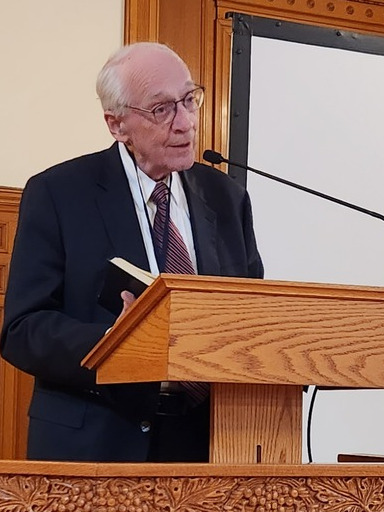


IN MEMORIAM
William Peter Mahrt
(March 9, 1939–January 1, 2025)
empty item: set css to not display this one
Your content goes here. Edit or remove this text inline or in the module Content settings. You can also style every aspect of this content in the module Design settings and even apply custom CSS to this text in the module Advanced settings.
(read more...)
Born in 1939, Dr. Mahrt dedicated his life to the study and performance of the Catholic Church’s sacred music, leaving an indelible mark on the field of musicology, as well as on the hearts and souls of those who knew him. His insights into the characteristics of the various forms of Gregorian chant elucidated the nature of the chant as integral to the sacred liturgy, even explicating the nature of the sacred liturgy itself. His exposition of the nature of beauty and its embodiment in Catholic sacred music, liturgical gestures and symbols, and architecture has served as an important guide in the Church’s understanding of the purpose of artistic beauty in divine worship. His work with medieval and Renaissance polyphonic masters illuminated the performances and scholarship of many choirs and students.
Dr. Mahrt’s academic journey began at Gonzaga University, near his family’s wheat farm in rural eastern Washington (near Reardan), where he earned his B.A. in 1960. He went on to receive an M.A. from the University of Washington in 1963 with a thesis on the keyboard fugues of Schumann. Driven by an insatiable curiosity and a deep love for music, he continued his studies at Stanford University, where he completed his Ph.D. in 1969 with a dissertation entitled “The Missæ ad organum of Heinrich Isaac.” Throughout his illustrious career, Dr. Mahrt held prestigious teaching positions at Case Western Reserve University, the Eastman School of Music, and Stanford University, where he inspired countless students as an Associate Professor, teaching courses on medieval notation, the modes, medieval and Renaissance repertoire and analysis, and the music of Johannes Brahms.
William Mahrt served as the President of the Church Music Association of America starting in 2005 after first joining the board in 1977. Under his editorship (2006–present) of CMAA’s journal Sacred Music, the oldest continuously-published music journal in the United States, the publication expanded in length and breadth to serve as an important locus for the study and praxis of the Church’s music. The editorials he wrote for the journal evince a profound understanding of both the sacred liturgy and its music and were remarkable both for their integration of scholarship and Catholic theology, as well as for the wide range of topics covered. As president of the CMAA, Dr. Mahrt played an important role in the discussions of the United States Conference of Catholic Bishops which led up to the 2007 publication of guidelines on music in the liturgy, Sing to the Lord. At the initiative of his friend and the CMAA’s then-director of publications, Jeffrey Tucker, a collection of his essays, The Musical Shape of the Liturgy, was published in 2012.
Known for his expertise in Gregorian chant, medieval performance, and the works of composers such as Machaut, Dufay, Isaac, and Lassus, Dr. Mahrt’s scholarly contributions earned him numerous accolades, including the NEH’s Newberry Library Fellowship in 1976, the Albert Schweitzer Medal in 1991, and the Thomas Binkley Award in 2010. He served as President of the Northern California Chapter of the American Musicological and Chairman of the Bay Area chapter of the Latin Liturgy Association. He was a frequent presenter and attendee at the International Congress on Medieval Studies in Kalamazoo, the International Fota Conference, as well as the conferences of the Society for Catholic Liturgy, International Musicological Society (IMS), and the IMS’s study group Cantus Planus. In demand as a teacher, Dr. Mahrt was a regular faculty member and plenary speaker at the CMAA’s annual Sacred Music Colloquium, Cantores in Ecclesia’s annual Byrd Festival in Portland, Oregon, the Lumen Christi Institute of the University of Chicago, the Singers’ Retreat in San Anselmo, California, the Renaissance Polyphony Weekend in Dallas, Texas, the Sacred Music Institute of America, and the Catholic Institute of Sacred Music at St. Patrick’s Seminary in Menlo Park.
In addition to his scholarly achievements, Dr. Mahrt was a founding member of the St. Ann Choir in 1963 and served as its director for most years since 1964. Under his leadership, the ensemble developed an extensive repertory of medieval and Renaissance motets and masses, singing each Sunday and principal feast day a Missa cantata in Latin, with Gregorian propers, two motets, and a mixture of Gregorian and Renaissance ordinaries at St. Thomas Aquinas Church in Palo Alto, California. Dr. Mahrt played an organ prelude and postlude for every Mass in which the organ was permitted. The choir, in response to an initiative by Dr. Mahrt several decades ago, also sings Sunday vespers and compline, with vespers usually at the St. Ann Chapel, the choir’s original home in Palo Alto. The ensemble is one of the few in the world which has a continuous tradition of singing the Church’s treasury of sacred music, all the while implementing the reforms to the sacred liturgy called for by the Second Vatican Council’s Sacrosanctum concilium and the 1967 Instruction Musicam Sacram. Dr. Mahrt was a graceful and compelling proponent for the place of Gregorian chant and sacred polyphony as the central music of the Roman rite, especially in the celebration of the modern Roman missal. He carefully collected and produced editions of important and interesting polyphonic works, teaching them to his choir with love and enthusiasm for the music in all its aspects. The choir continues singing from these editions, as well as the large choirbook-style score of the Gregorian chants from Annie Bank Editions, even inspiring the production by longtime choir member Susan Altstatt of beautiful illuminations of the choir’s patronal feast’s propers. The extensive library of the St. Ann Choir, complete with its elegantly accurate translations of many motet texts, was a core part of the early formation of the Choral Public Domain Library by one of Dr. Mahrt’s students at Stanford, Rafael Ornes. Many of Dr. Mahrt’s students from Stanford joined his ensemble to augment their experience of the music, in its proper liturgical context, about which they were writing dissertations and theses. Singers flocked from all backgrounds to sing with him in this unique ensemble, and they are the core of those who attended Dr. Mahrt’s bedside until his hour of death. The friendships formed in the choir by Dr. Mahrt served as an anchor in his life and the lives of so many others. His leadership of the St. Ann Choir and the Stanford Early Music Singers was a testament to his unwavering commitment to sacred music, the true and deep bond between the highest levels of scholarship and praxis, and a fervent love for his Catholic faith.
To celebrate his life and legacy, a conference entitled “The Musical Shape of the Liturgy: Celebrating the Life and Work of William P. Mahrt” was held in November of 2023, marking the 150th volume of Sacred Music and honoring the establishment of a new chair in sacred music at St. Patrick’s Seminary in Menlo Park under the leadership of Dr. Jennifer Donelson-Nowicka. Scholars, musicians, and friends from around the country gathered to fête Dr. Mahrt’s remarkable accomplishments and work.
Dr. William Mahrt’s contributions to the field of musicology and his passionate dedication to sacred music will be remembered and cherished by his family, friends, students, colleagues, and the countless lives he touched through his work. His legacy will continue to inspire and guide future generations in the pursuit of beauty and excellence in sacred music.
More than just a scholar and a musician, Bill—as he liked to be called—was a gentleman, a colleague, and a dear friend. Highly respected by his students, singers, and all who knew him, he was a very modest man and always remained a humble worker in the vineyard of the Lord. After a year of several health problems, Bill suffered a stroke while in the hospital receiving care for other matters. He was preceded in death by his mother, Evelyn, his father, Peter, and his sister Kathryn. He is survived by his sister Susan Perkins, brothers-in-law Tom Brannon and Norman Smith, nieces and nephews, and their children and grandchildren.
Bill, you have been a shining light for so many of us, and you shall never be forgotten. Requiescas in pace!
NON NOBIS DOMINE SED NOMINI TVO DA GLORIAM
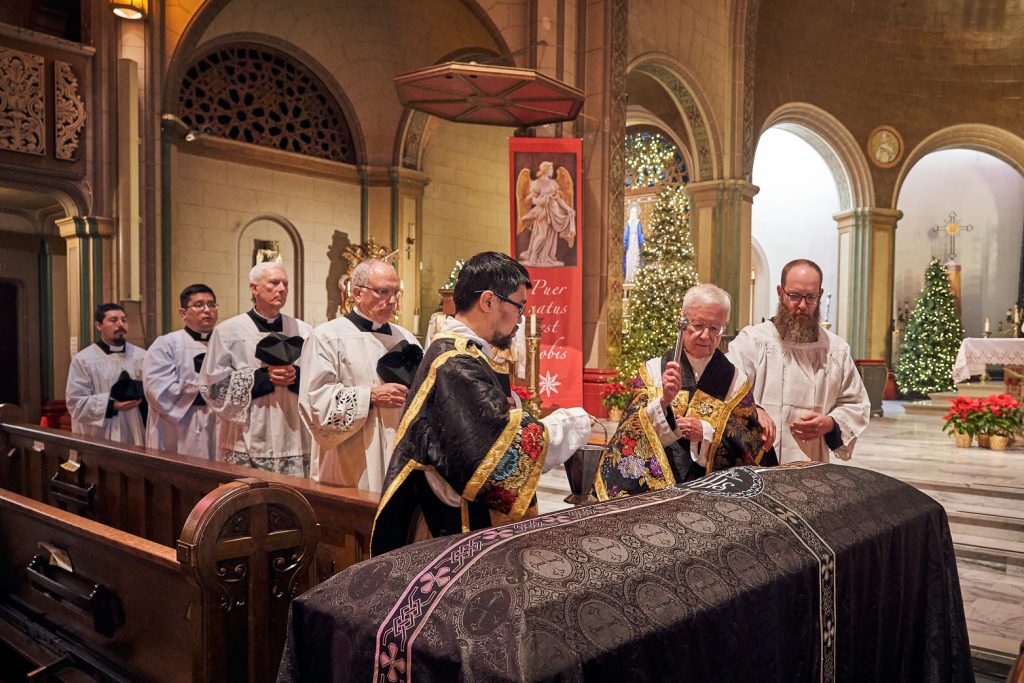
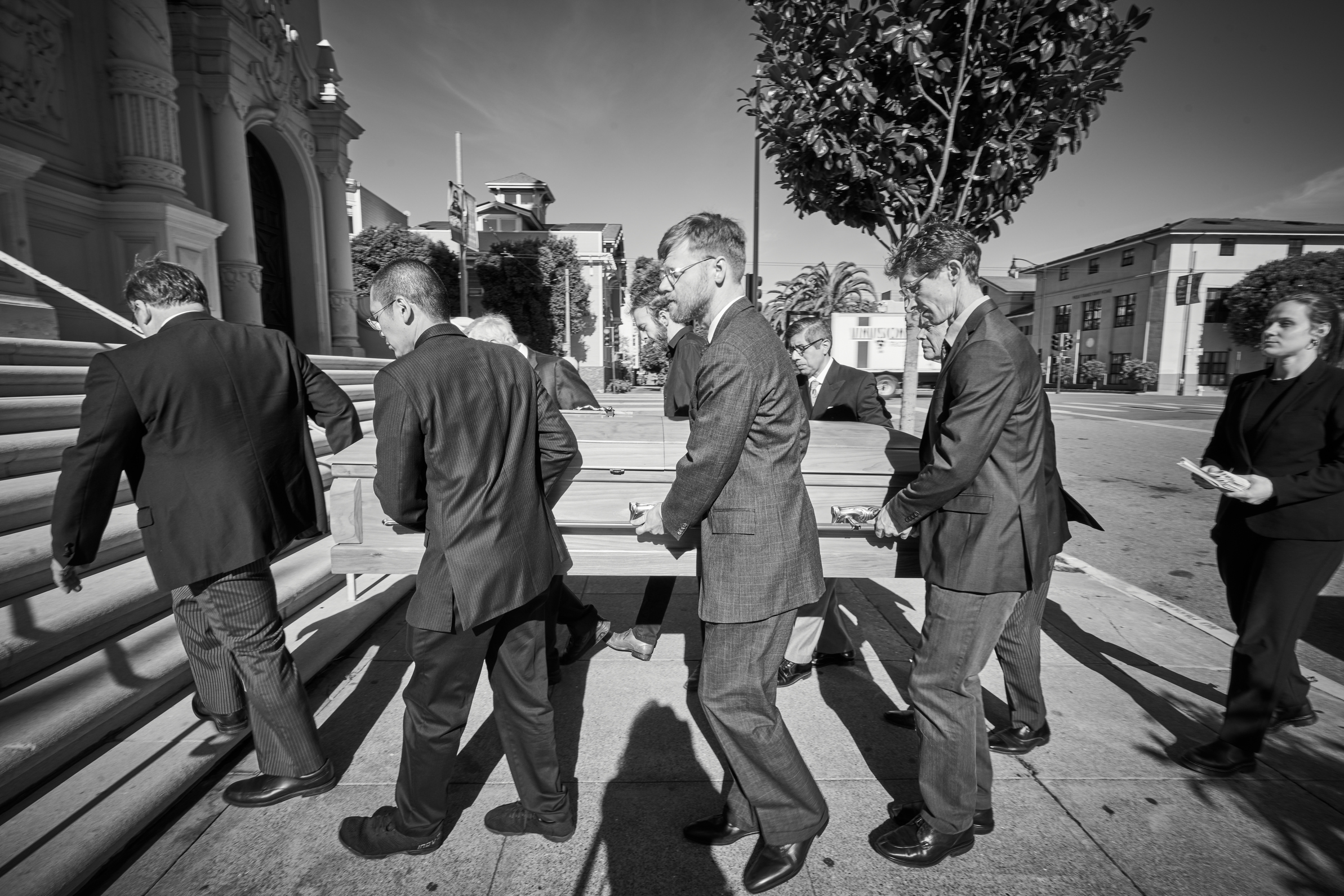
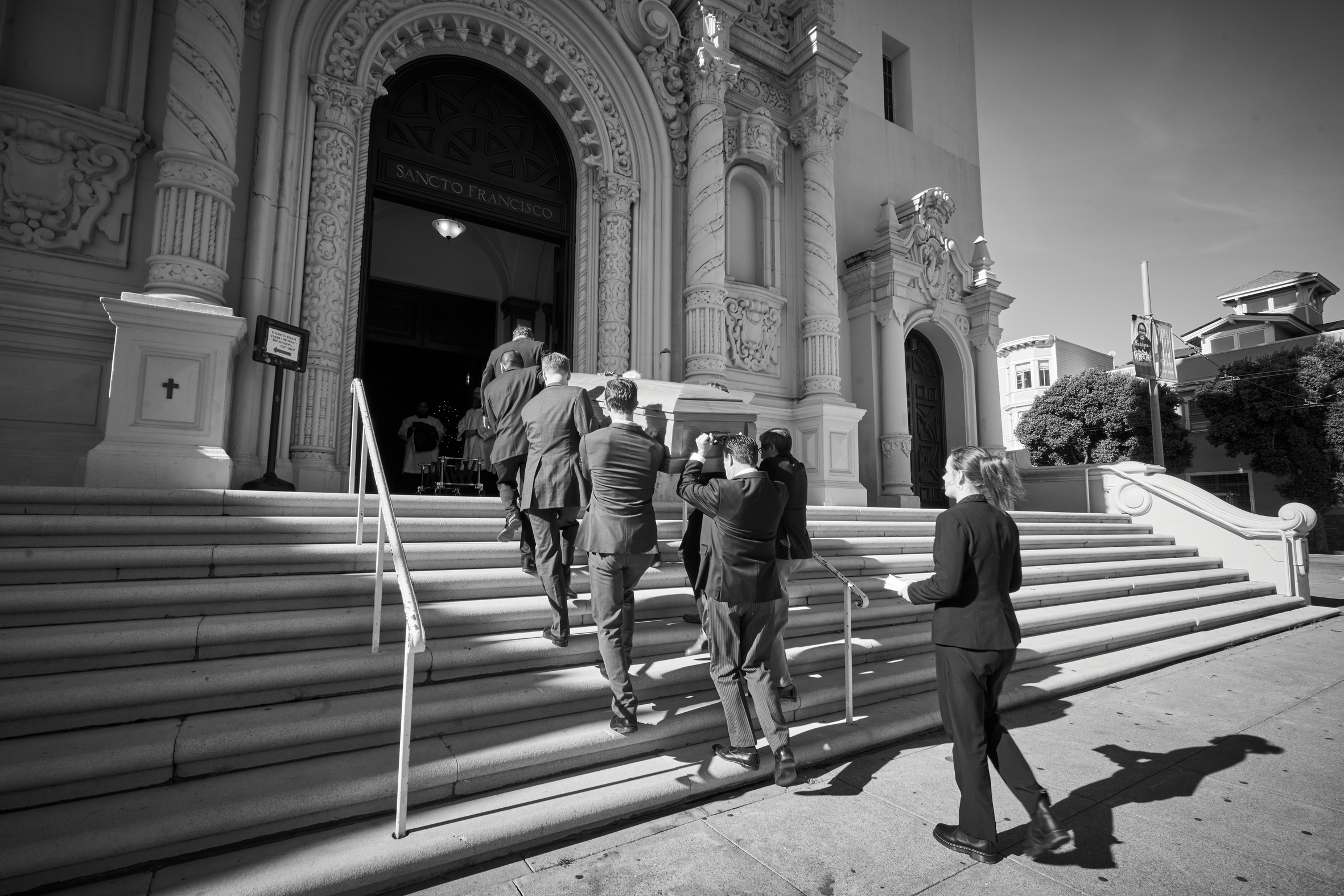
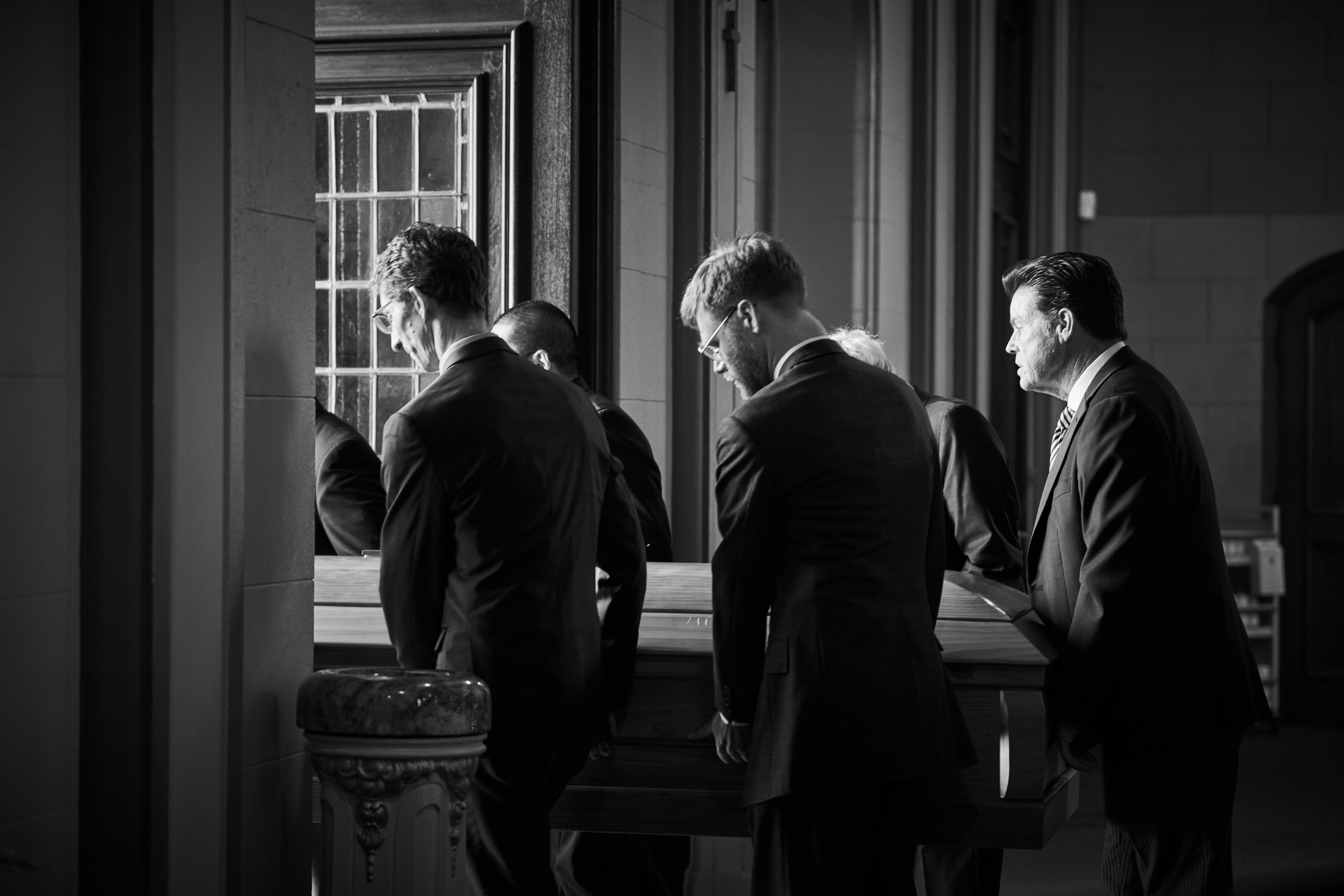
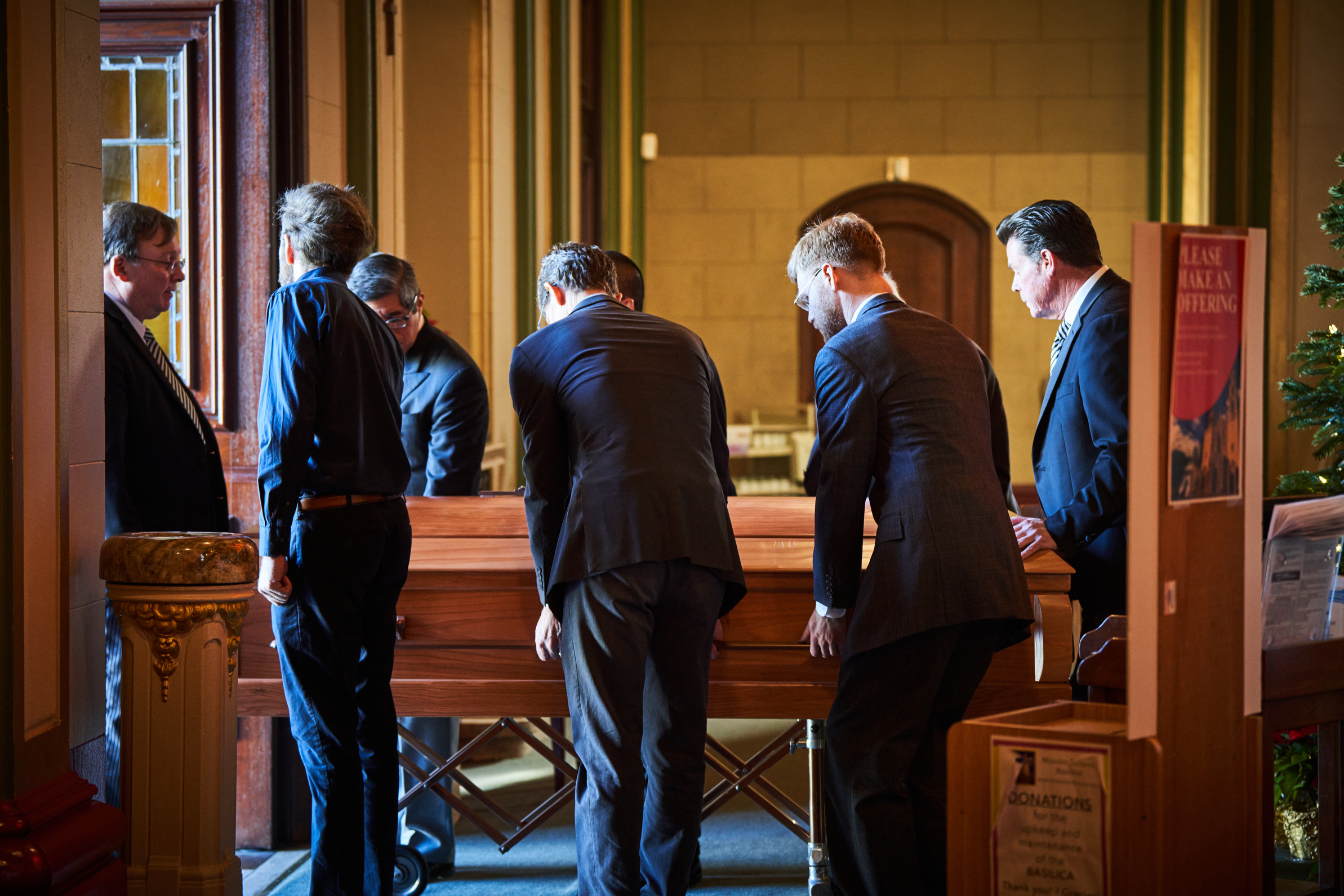
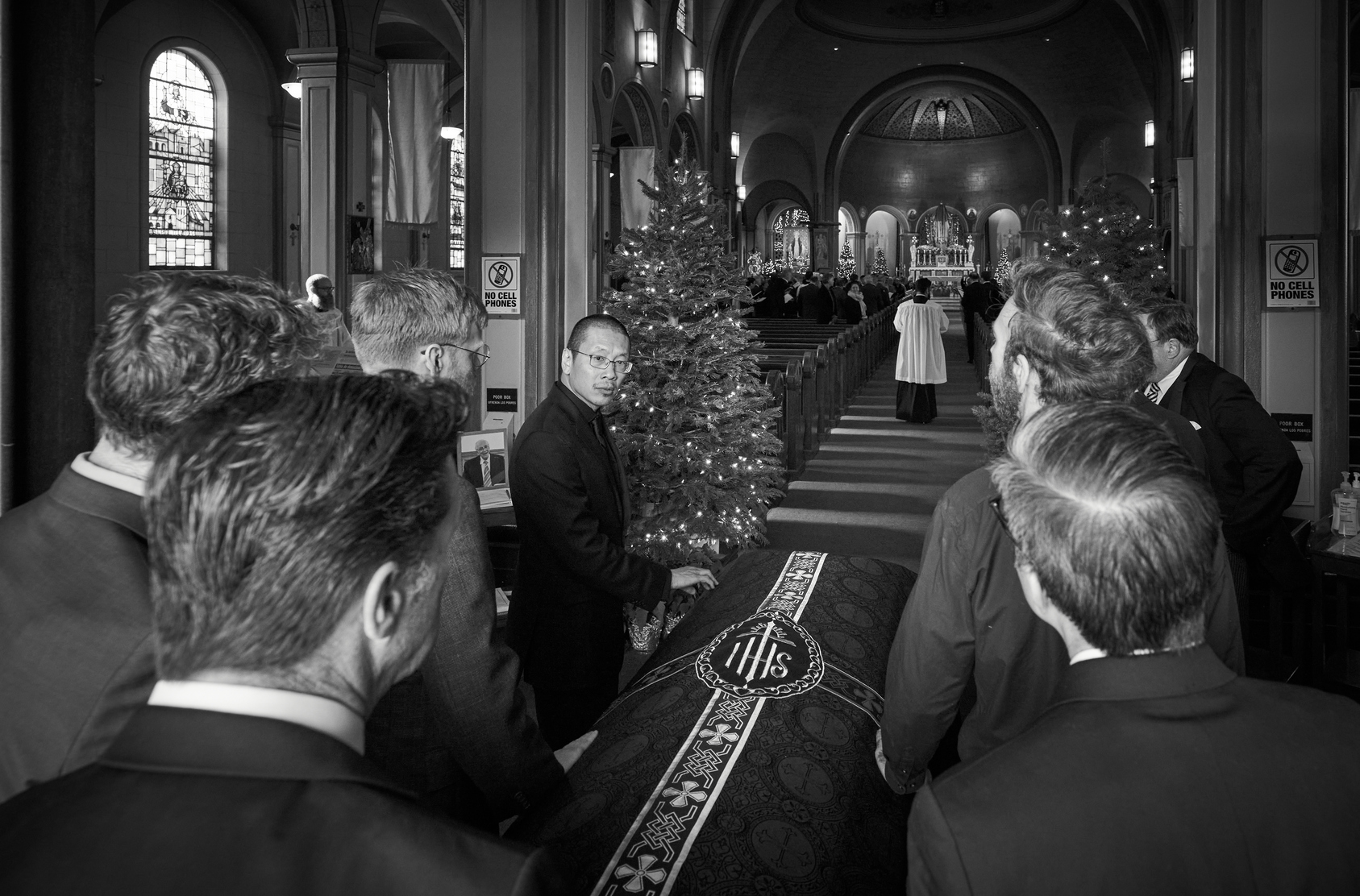
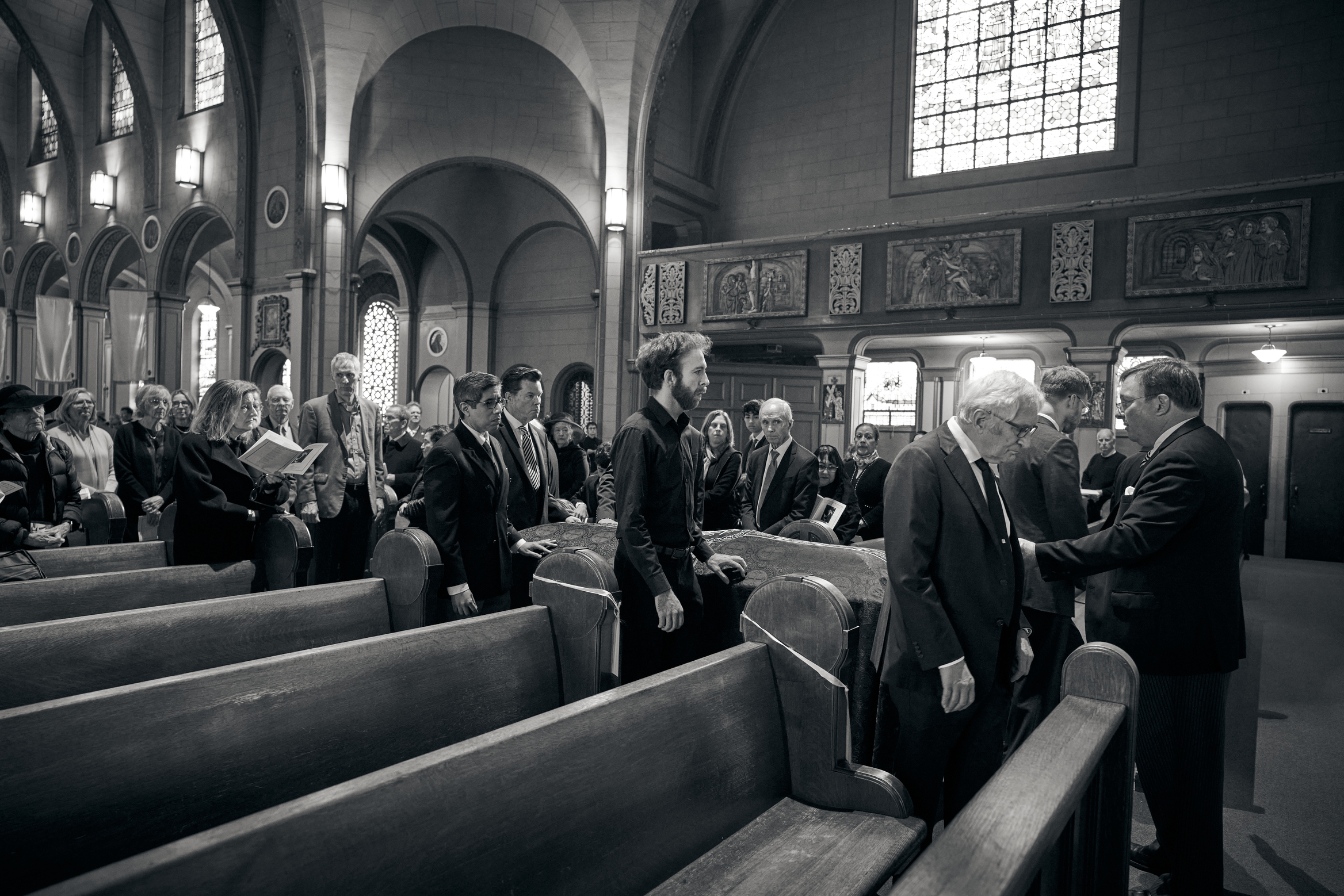
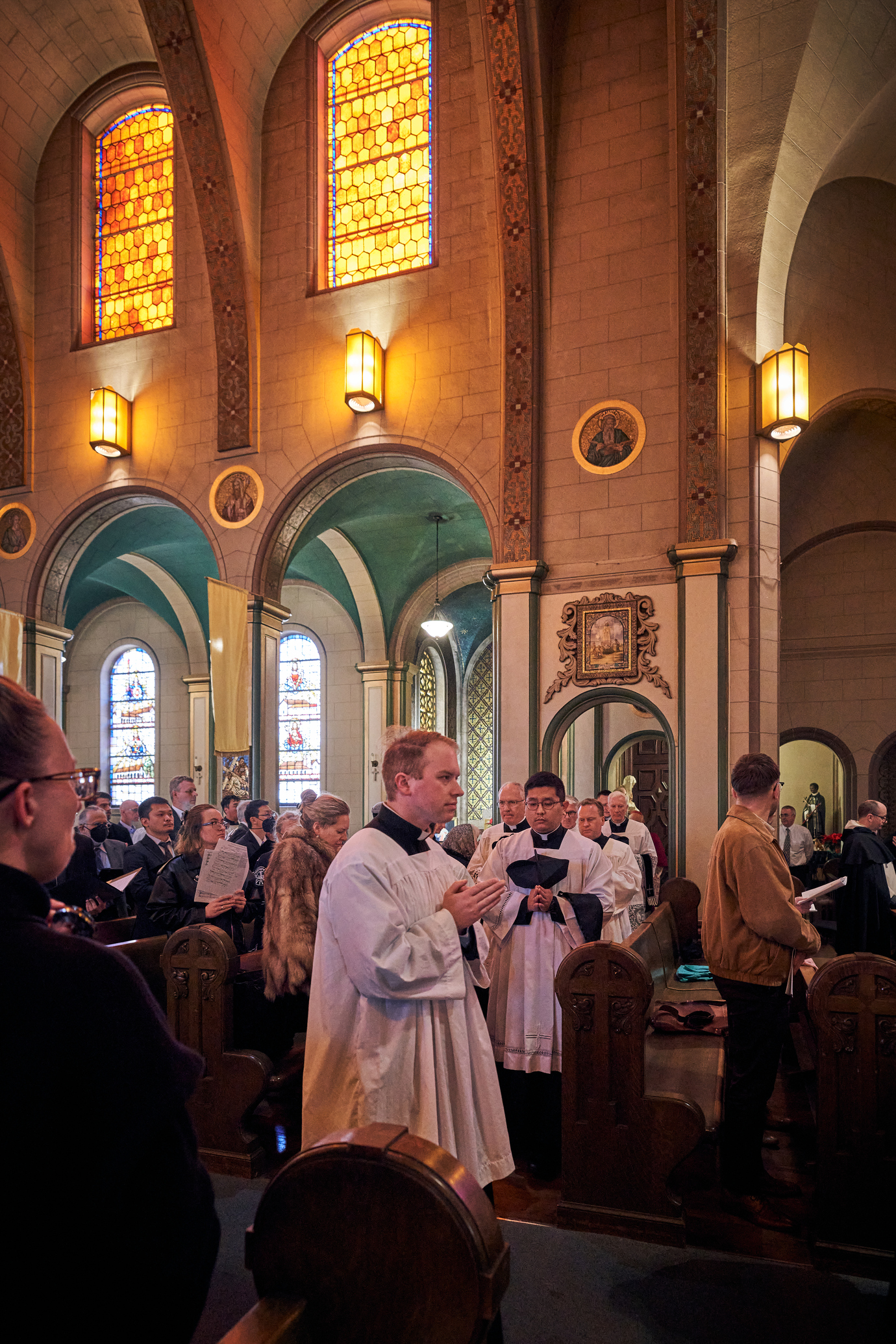
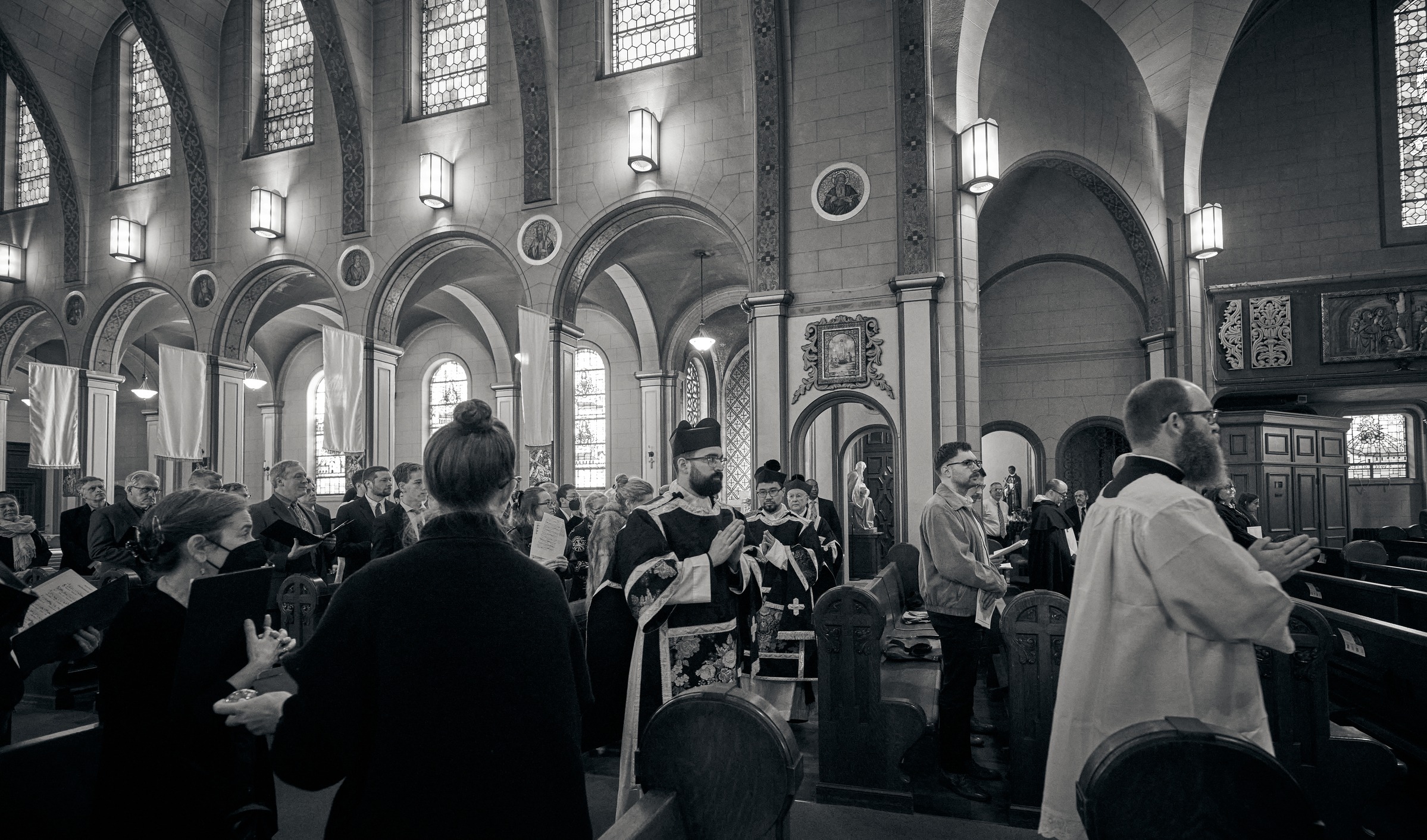
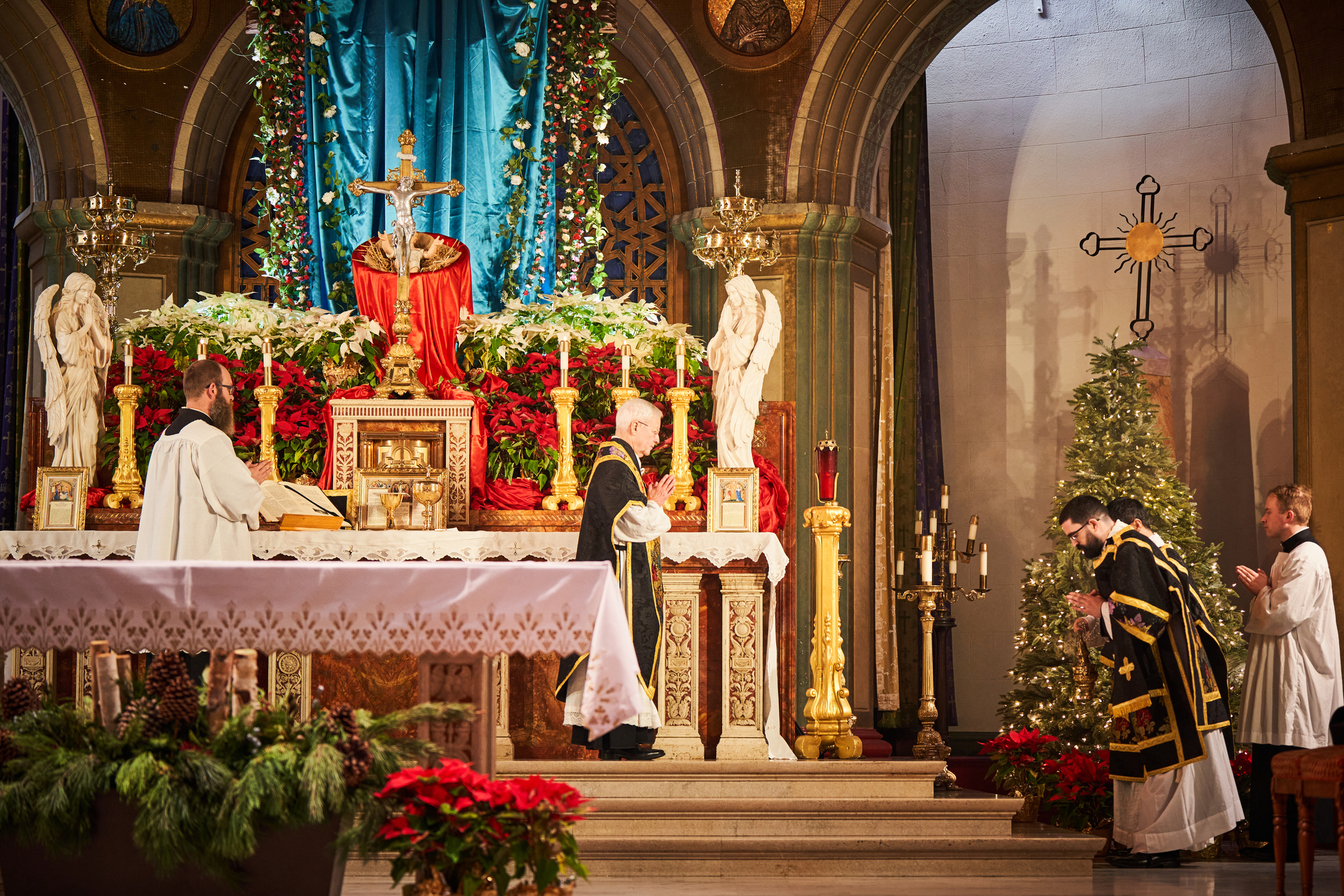
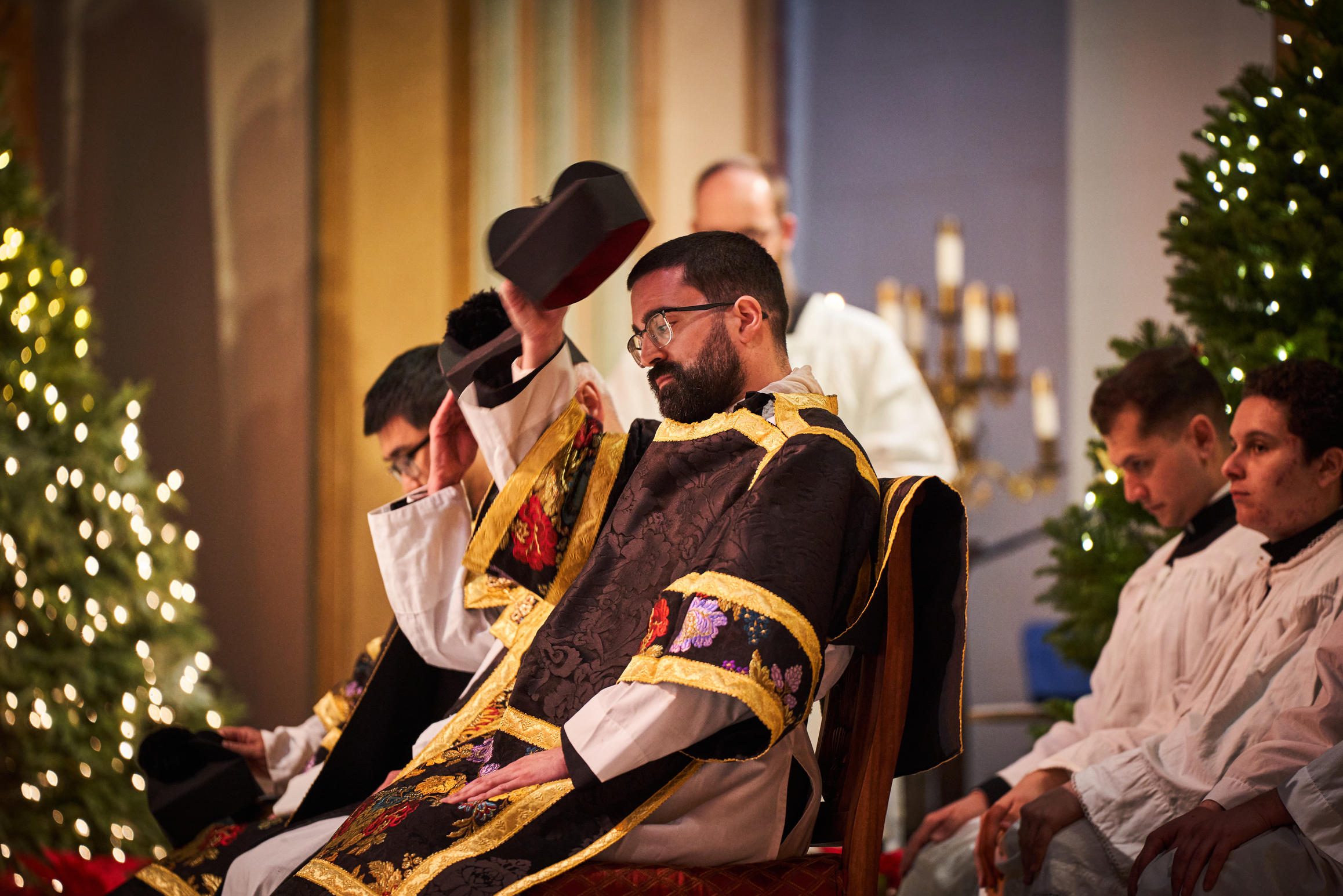
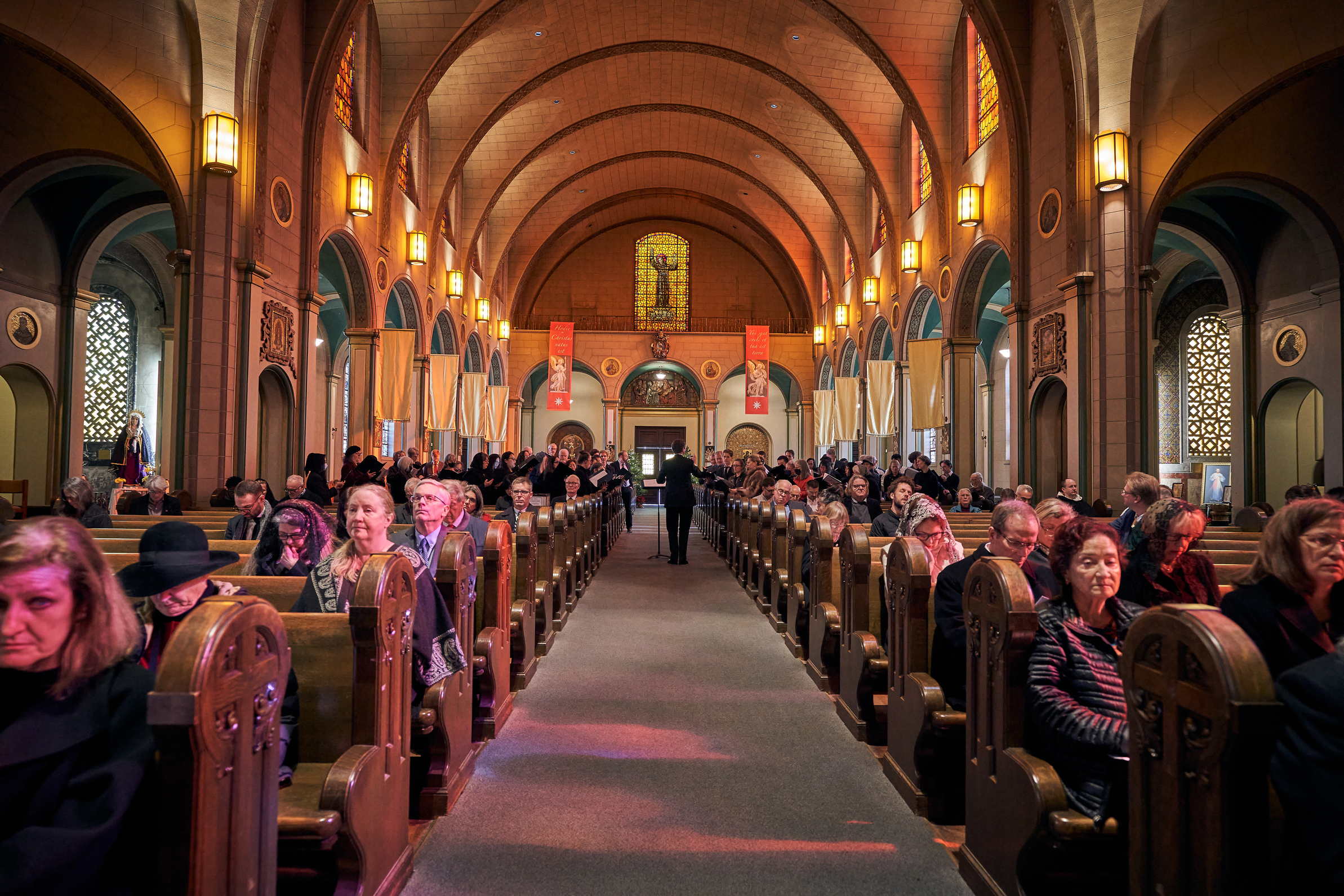
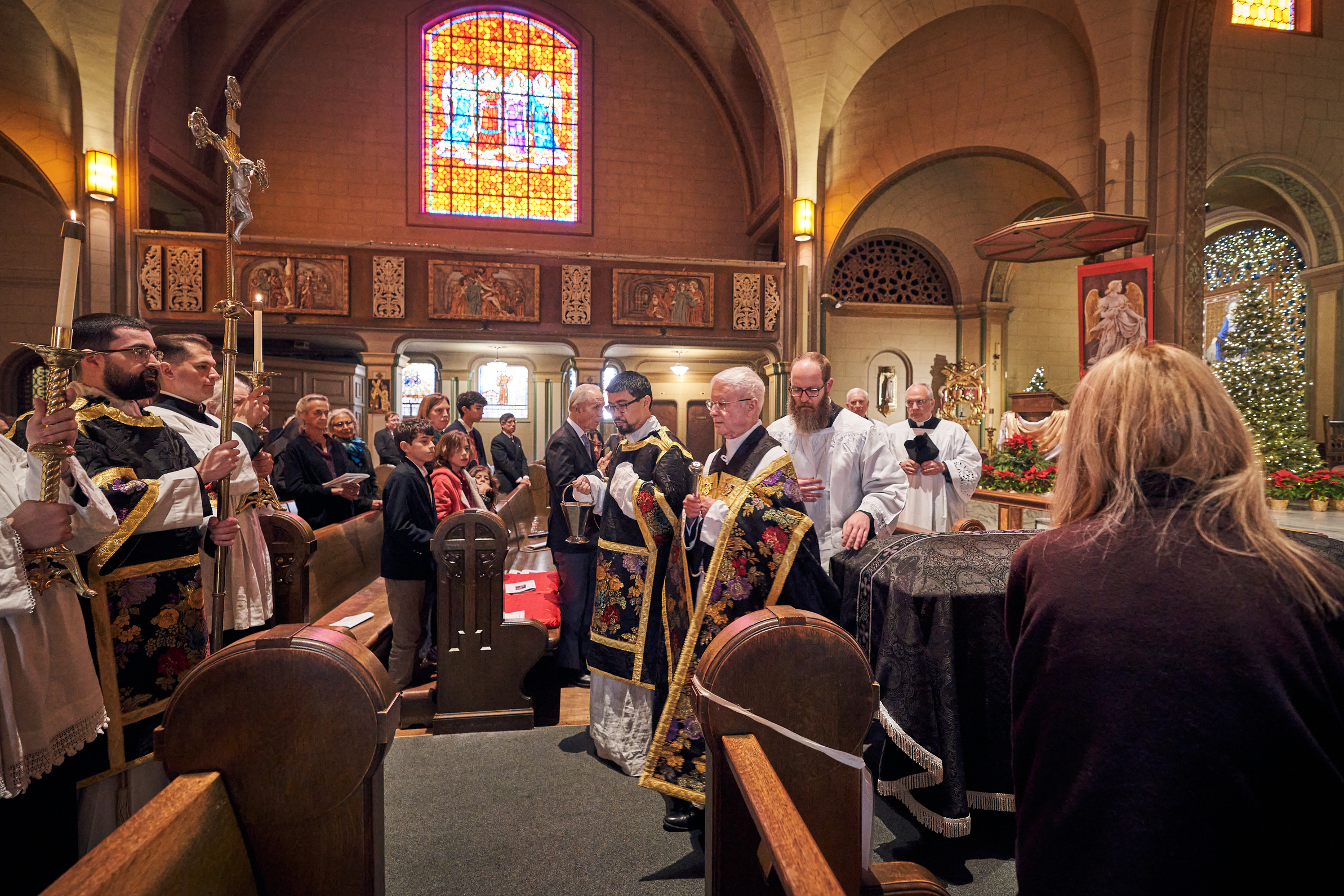
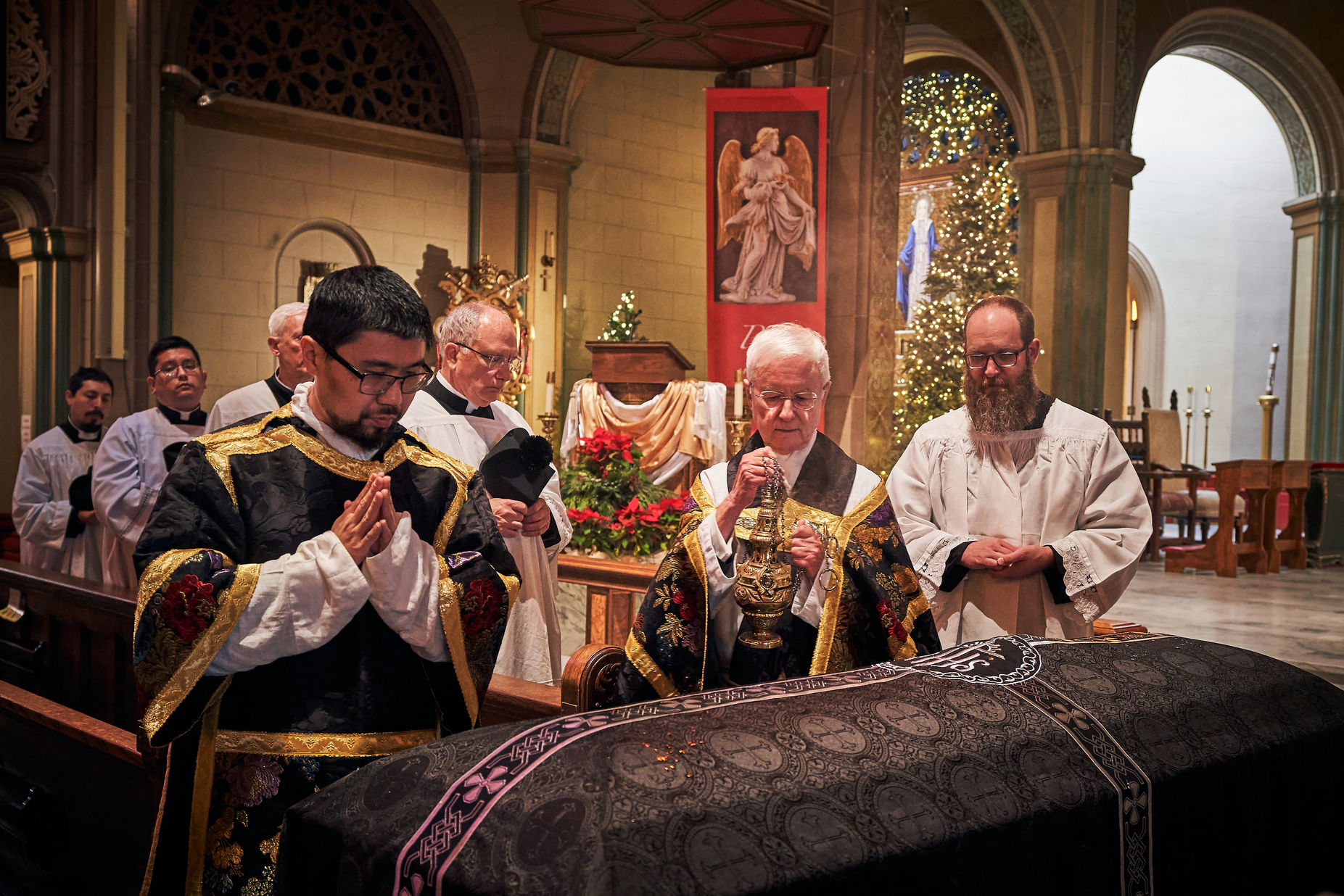
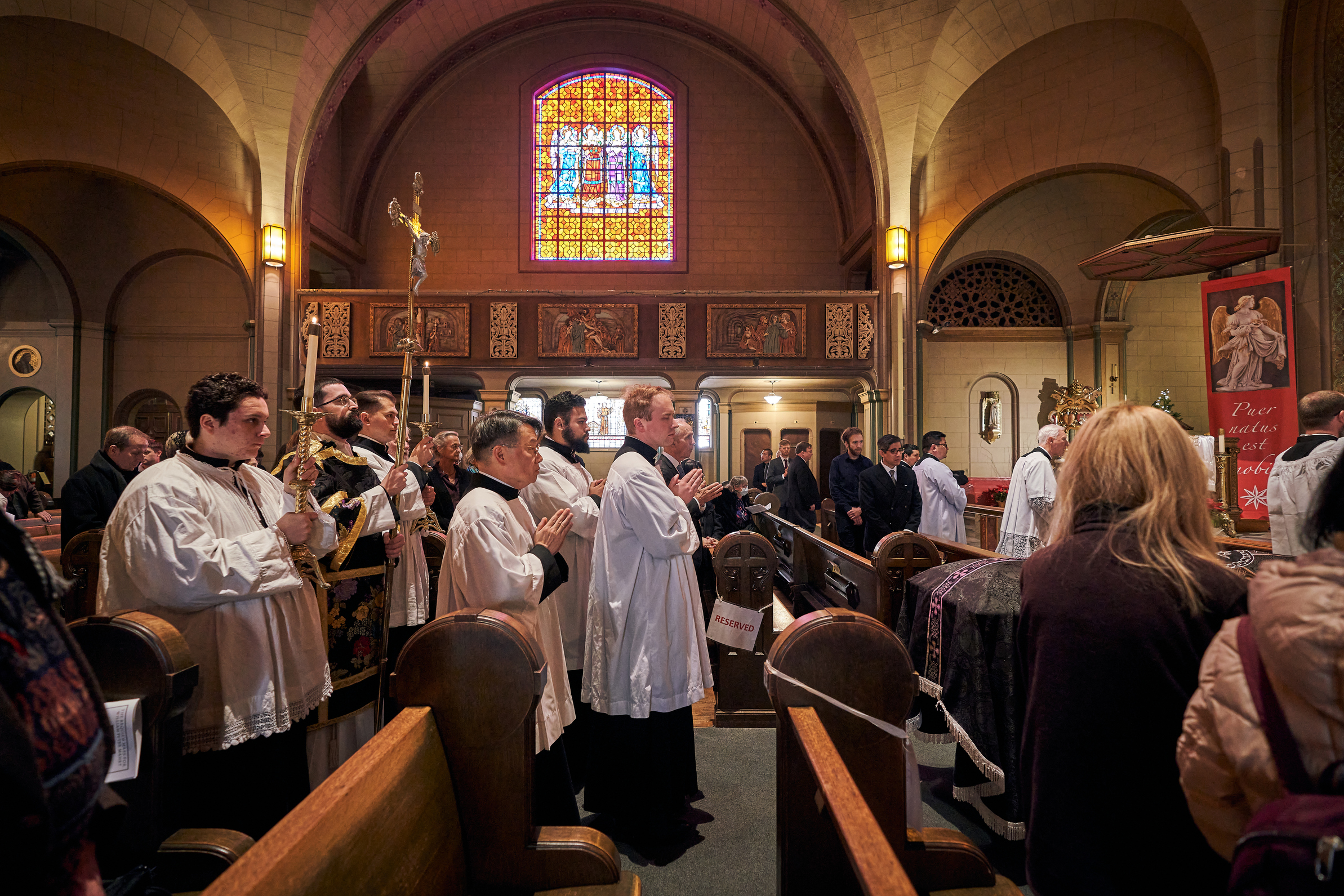
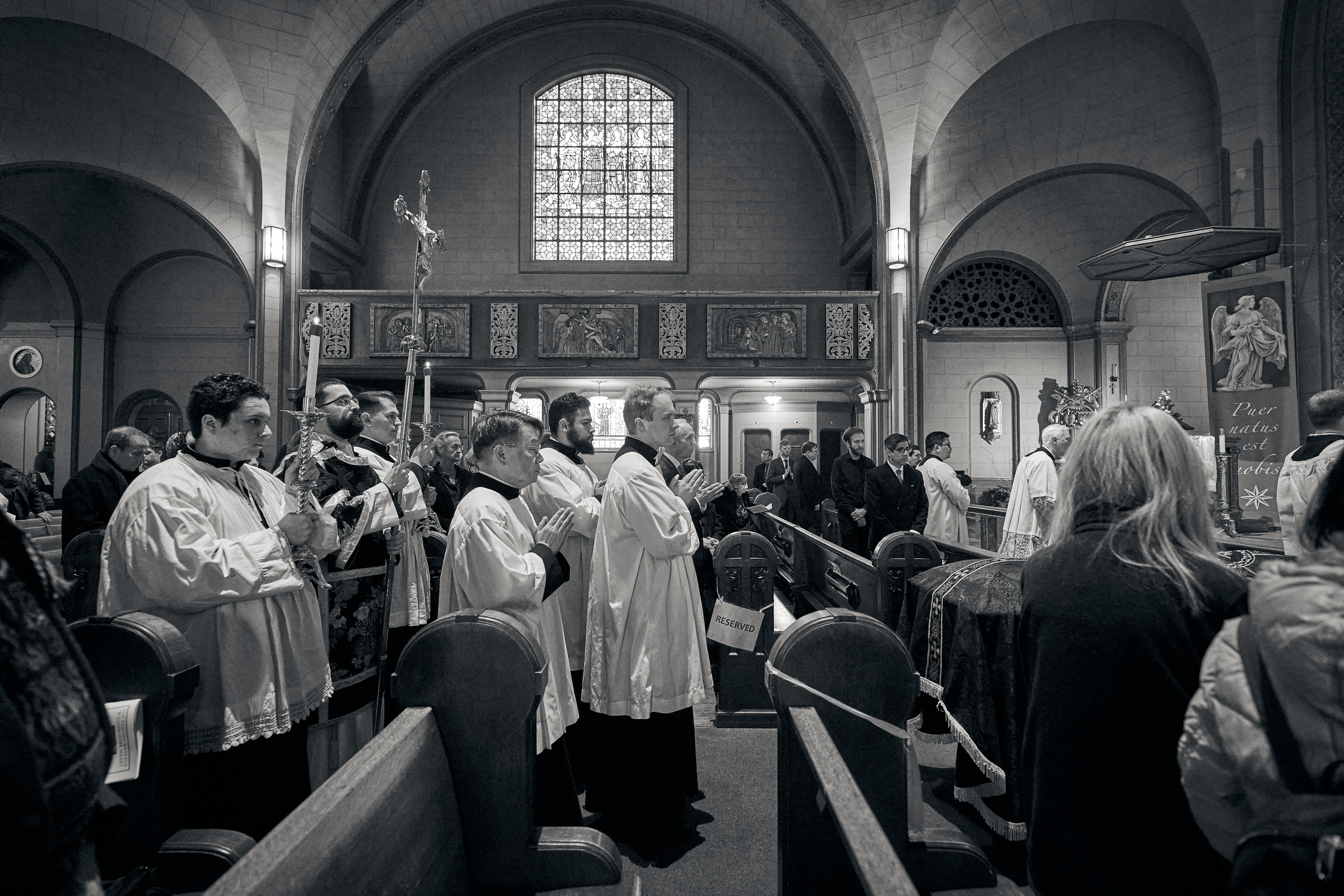
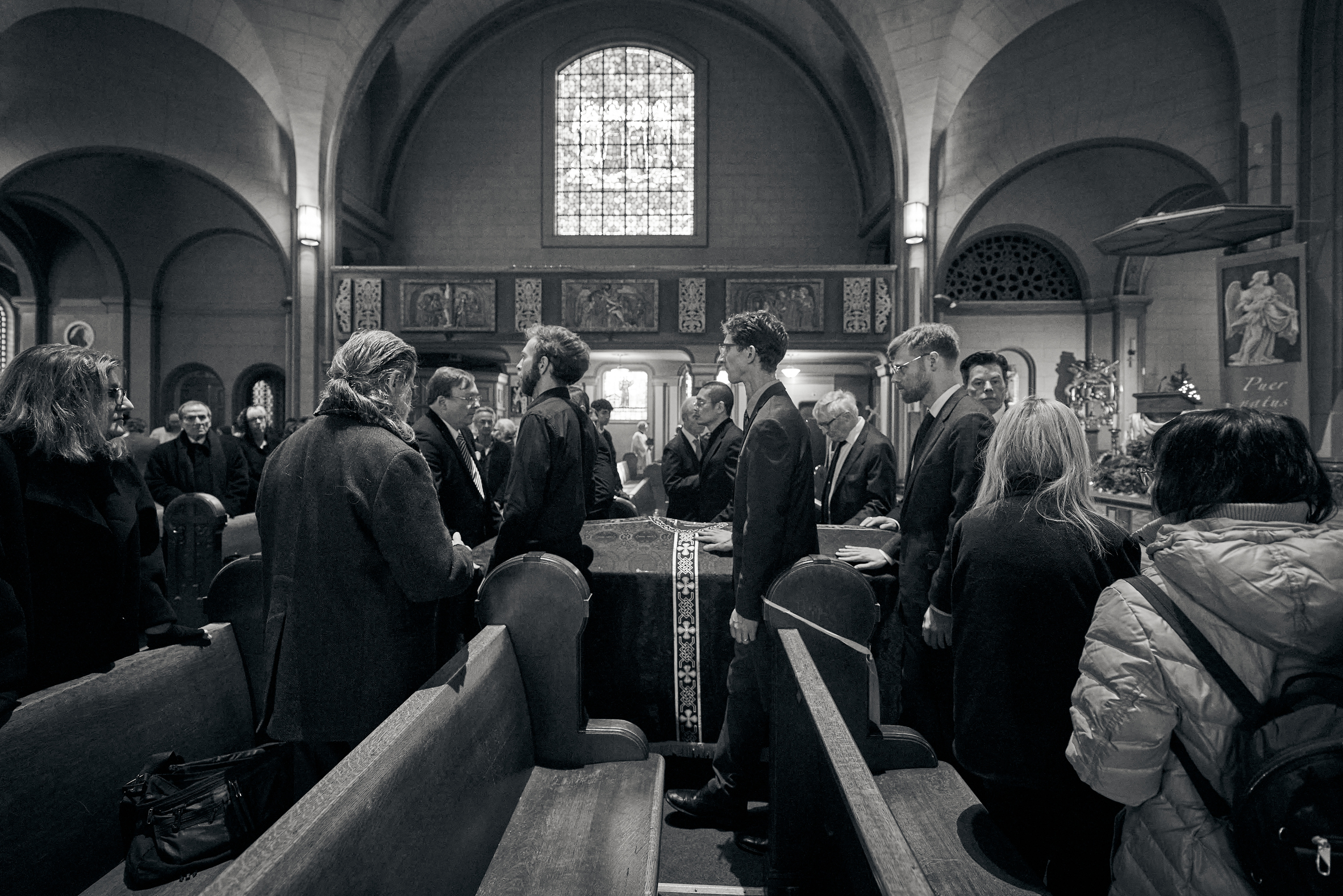
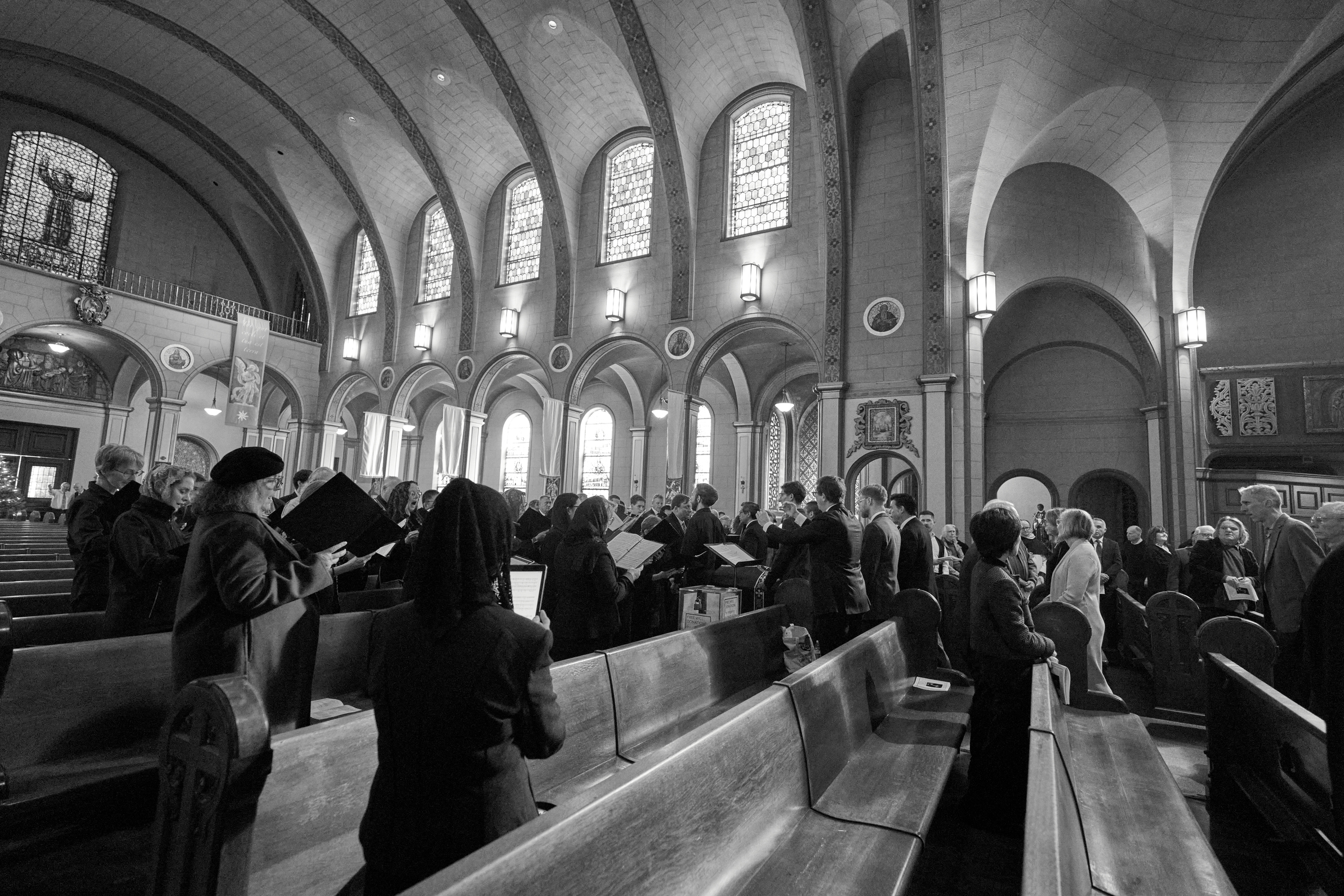
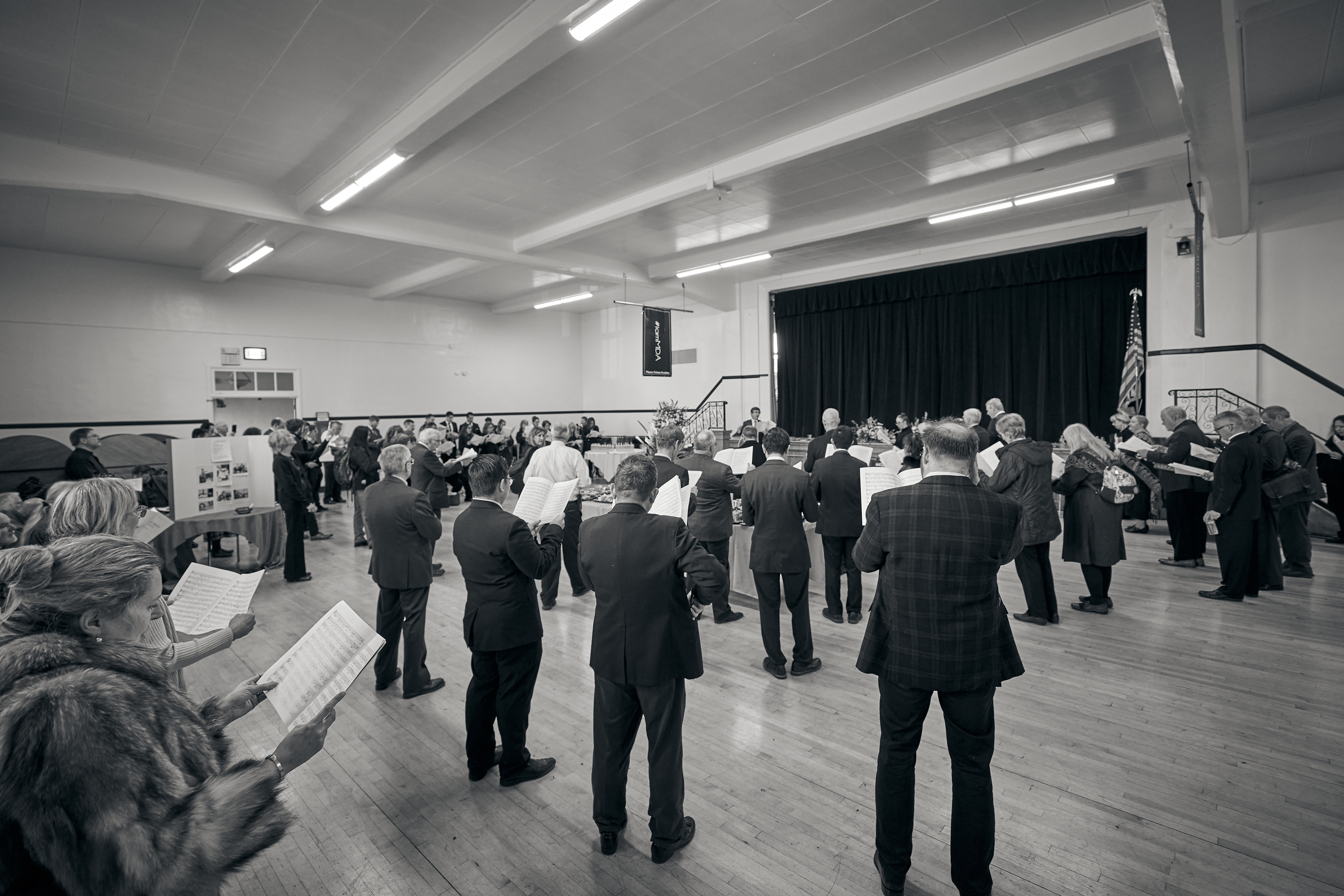
Funeral arrangements were handled by Duggan’s Funeral Service. The wake took place at St. Thomas Aquinas Church in Palo Alto, California on Thursday, January 9, 2025. Vespers were sung at 6 p.m., a rosary prayed at 7 p.m., and Compline sung at 7:30 p.m. The funeral was at noon on Friday, January 10, 2025 in the Basilica at Mission Dolores in San Francisco, California. A reception followed. Burial arrangements are to be announced.
(close the text above)
Sermon for Solemn Requiem Mass
January 10, 2025
Mission Dolores Basilica
Archbishop Salvatore J. Cordileone
Introduction
It has not gone unnoticed by any of us, I am sure, that our beloved friend, professor and mentor William Peter Mahrt passed from this world on the first day of a new year. That the last day of his life occurred on the first day of a new beginning makes for a very fitting lesson of divine providence for all of us. Professor Mahrt certainly exuded the quality of newness, ever fresh spiritual youthful vitality even in his declining stages of physical old age.
Love Ever Fresh and New
In this we see reflected the one who is ever new, who, indeed, at the end (that is, the end of the story of the Bible), assures us, “Behold, I make all things new” (Rev 21:5). He proclaims this as the holy city, the new Jerusalem, comes down “out of heaven from God, prepared as a bride adorned for her husband” (Rev 21:2). This is the love of our Lord and Savior Jesus Christ, the love of a bridegroom for his bride, the love of spouses that becomes ever new as they mature together into old age, when they live their marital covenant in accordance with God’s plan. Yes, he makes all things new, and keeps them new, eternally so. As St. Augustine so poignantly teaches us, he is the “beauty ever ancient, beauty ever new.”
empty item; keep this but use css to hide it
Your content goes here. Edit or remove this text inline or in the module Content settings. You can also style every aspect of this content in the module Design settings and even apply custom CSS to this text in the module Advanced settings.
(read more...)
Professor Mahrt also understood that the newness of the love of Jesus Christ is not just a concept, but must be known and lived in one’s life and must be experienced in the Church’s life of worship. That to which he dedicated his whole life makes the eternal newness of the beauty that is God audible and palatable to us. Gregorian chant is ancient in origin, but it never gets old! We will be ever grateful to him for constantly reminding us that, contrary to what so many Catholics seem to think nowadays, music is not something extrinsic to the liturgy, added on to it as if it were a luxury item, but rather is integral to it, and must grow organically out of the previous forms tracing back to chant itself, in keeping with the teaching of the Second Vatican Council. As he so wisely states in his landmark work that will remain a testimony to his lasting legacy, The Musical Shape of the Liturgy, “in studying the texts of the liturgy, some have forgotten that while liturgy is regulated largely in its texts, it does not consist of a series of texts to be read, but rather a series of sacred actions to be done” (p.5).
His understanding of the integrity of the liturgy, with music and sacred action, is really a metaphor of his whole life: a man outstanding in the virtues of integrity, humility, generosity, piety and purity. He gave his all to the work of renewal of Catholic worship without any regard for personal compensation – and often did not receive any. That never slowed him down, let alone stopped him, from the pursuit of spiritual excellence through excellence in celebration of the sacred liturgy. His legendary St. Ann’s choir will stand as a lasting reminder of this. So, then, allow me to correct myself. He did receive compensation for his tireless effort, which was the only compensation that he treasured: the joy he derived from handing on the beautiful sacred music tradition of the Church.
Lessons from Living Examples
Thus it must be for us. Jesus Christ comes to visit us in every Mass, the King makes himself present to us, which demands that we give him our best. But not just in terms of liturgical aesthetics, as important as that is. For if it ends there, we will have failed in our response to the love of the King of kings, a response so well modeled for us by the life of William Mahrt. Yes, the liturgy is a series of sacred actions to be done, but not just inside of the church, but with our whole lives. Living in communion with Jesus Christ, living in his eternally new love, transforms one ever more perfectly back into the image in which God originally created us: we grow in virtue, becoming better people in every sense, evermore capable of receiving and sharing God’s love. This is the true fountain of youth, the love of the one who makes all things new.
I suppose none of us feels at this time the lightness of the fresh discovery of new love, as we feel the weight of sadness in mourning the passing of one whom we loved so much and who gave us so much. But that is the point: gratitude. We cannot thank God enough for all He has given us, and at this time especially for what He has given us through Professor Mahrt. So let us not allow the sadness of our mourning to overshadow the brightness of the gratitude we feel toward God, not only for our friend, but for all that God has given us through the beauty of the Church’s liturgical and artistic patrimony, which reflects the beauty of the one who came to save us from the ugliness and death of sin. Let us, then, ask him for the wisdom and grace to steward wisely all of the gifts of time, talent and treasure he has given us, that we might lead the Church in worthy worship of Him, the one true God, with all of these treasures we have inherited from our predecessors in the faith.
The beauty of this patrimony itself speaks to us of the timelessness of the life God has prepared for us. Our gratitude, then, must lead us to a deeper trust in Him – the trust for which we pray in the Sequence of this Requiem Mass. The Dies irae gives us a healthy dose of realism in that it puts right in front of us the stark reality of the finality of death and judgment, bringing us into the scene of the final judgment in Matthew 25, in which our Lords warns us: “When the Son of Man comes in his glory, … he will sit upon his glorious throne, and all the nations will be assembled before him.”`
Lessons from the Liturgical Texts
This is the stark reality of which the Sequence reminds us, with a chilling description of what it will be like*:
The mighty trumpet’s wondrous tone
shall rend each tomb’s sepulchral stone
and summon all before the Throne.
And the sense of fearfulness continues, with vivid imagery:
Now death and nature with surprise
behold the trembling sinners rise
to meet the Judge’s searching eyes.Then shall with universal dread
the Book of Consciences be read
to judge the lives of all the dead.O what shall I, so guilty plead?
and who for me will intercede?
when even Saints shall comfort need?
But there is the cry of mercy, evoking again the scene from Matthew 25:
Take me from the goats’ cursed band,
o make me with Your sheep to stand,
as child of grace, at Your right Hand.
And so the plea for mercy continues:
O King of dreadful majesty!
grace and mercy You grant free;
as the Fount of Kindness, save me!Recall, dear Jesus, for my sake
you did our suff’ring nature take
then do not now my soul forsake!
And then it rises from the fear of the finality of death and judgment, through the confident pleas for mercy, to the hope that is woven throughout:
In weariness You sought for me,
and suffering upon the tree!
let not in vain such labor be.As is also the note upon which it concludes, with ever-abiding trust in the all-merciful One:
When the doomed can no more flee
from the fires of misery
with all the chosen ones call me.
“With all the chosen ones call me.” This is trust based in reality, a trust that is also exemplified by the sister of Lazarus of Bethany. I am always struck by the disposition of Martha as described in the Gospel reading for the Requiem Mass. When our Lord appears on the scene after his friend and Martha’s brother Lazarus dies, she does not ask him to do anything. Rather, she simply places her trust in him, acknowledging his power and knowing that he will do what is best: “Lord, if Thou hadst been here, my brother had not died: but now also I know that whatsoever [T]hou wilt ask of God, God will give it Thee.” God is working out His loving plan for us, and as St. Paul reminds us, for those who love Him, all things work out for the good (Rom 8:28). Let us then strive to the best of our ability, with the help of His grace, to please him in all things and leave the rest to Him.
This is His will, and His will cannot be to our detriment. We acknowledge as much in the collect for this Requiem Mass, in asking Him to receive the soul of our brother into paradise, whom He has called out of this world – or, literally, “ordered” (jussisti) to pass from this world to the next. We are under God’s orders, and the trust that is authentic Christian trust will transform us to the point that we can have peace and confidence in what God orders for us, for we will have prepared our soul to meet Him with prayer, penance and a life of virtue lived to the best of our ability with the help of His grace.
Conclusion
Only the best for God: in our worship, with our talents, with all of the blessings He has entrusted to us, in our personal, professional and social lives. Professor Mahrt has taught us the joy and simple goodness of such a life of authentic, generous and lively faith, lived in the ever-new love of God. As we entrust him now to the one who makes all things new, let us ask God for the grace to discover and live in the true fountain of youth, shown to us so compellingly in the life of our friend, mentor and beloved professor, William Peter Mahrt. Eternal rest grant unto him O Lord, and let perpetual light shine upon him. May his soul, and all the souls of the faithful departed, through the mercy of God rest in peace. Amen.
* I am citing the Dies Irae here from a different translation than that which is in the program guide for this Requiem Mass.
(close the text above)

361_William_Mahrt
william-mahrt-cameo

mahrt-at-lectern
Mahrt_Funeral_001
Mahrt_Funeral_002
Mahrt_Funeral_003
Mahrt_Funeral_004_1

Mahrt_Funeral_004_2
Mahrt_Funeral_004_3
Mahrt_Funeral_005
Mahrt_Funeral_006
Mahrt_Funeral_007

Mahrt_Funeral_008

Mahrt_Funeral_009

Mahrt_Funeral_010

Mahrt_Funeral_011

Mahrt_Funeral_013

Mahrt_Funeral_014

Mahrt_Funeral_015

Mahrt_Funeral_016
Mahrt_Funeral_017_1

Mahrt_Funeral_017_2
Mahrt_Funeral_018

Mahrt_Funeral_019
Mahrt_Funeral_071

Mahrt_Funeral_100
Mahrt_Funeral_101
Mahrt_Funeral_104
Mahrt_Funeral_110
Mahrt_Funeral_111

Mahrt_Funeral_116
Mahrt_Funeral_118
Mahrt_Funeral_124

Mahrt_Funeral_127
Mahrt_Funeral_128
